
 Einstein’s Workshop has always been committed to welcoming neurodiverse students in our classes and camps whenever possible. We are rolling out a new set of classes specifically designed to cater to students who have sensory issues. Neurodiverse students continue to be welcome in the classes and camps that best fit their schedules.
Read more about sensory-friendly classes here.
Neurotypical students are also welcome in the sensory friendly classes.

We are thrilled to introduce a premium morning program designed specifically for 3 and 4-year-olds and their caregivers. Enjoy messy, hands-on science and engineering projects, followed by private free play in our STEAM Exploration Zone at a time we are closed to the general public.
Click here to download a pdf with Fall 2026 – Spring 2027 Classes.
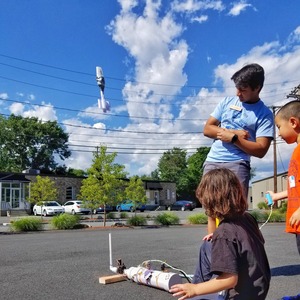 Many Einstein’s Workshop’s school year classes are offered through a school-year-long “concentration.” Concentrations meet on the same day and at the same time all school year. Most concentrations consist of four of our popular classes for a given interest and age range. This way, kids can enjoy a school year full of STEAM learning and families get a consistent schedule. Students may join concentrations throughout the academic year, usually at the quarter mark. If students want to try something new, they can switch to a different concentration at the end of each quarter. Many of our concentrations may be entered on a rolling basis throughout the school year.
We also offer many popular classes in Club format. Clubs are a social and supportive environment for kids to interact with their peers, tackle new challenges, and learn new skills. Clubs admit students throughout the year on a rolling basis. Email info@einsteinsworkshop.com if you wish to enter outside a quarter boundary, and we can arrange to prorate the cost of the quarter in progress.
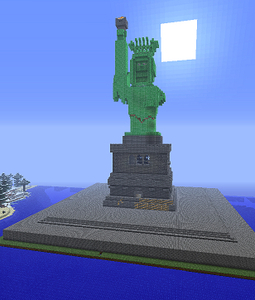 The kids think they’re playing a game, but we know they’re learning a lot! Starting in first grade, kids learn math, architecture, roller coaster design, and basic programming skills including how to modify Minecraft. By fourth grade, we’re teaching them medieval history, electronics, and computer programming. Minecraft is a great motivator! We’ve got kindergarten Minecraft fans covered too; they learn basic digital citizenship skills and how to use computers, including keyboard and mouse skills, in our Minecraft Adventures Club.
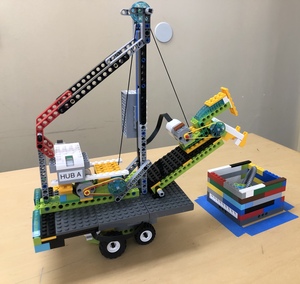 Einstein’s Workshop started as a FIRST LEGO League, so FLL will always be near and dear to us. Younger kids learn LEGO robotics using human power–cranks, levers, winches–and electronics–motors, sensors, and computers. Then they put their skills to work as part of a FIRST LEGO League Explore team. Teams present at our Robotics Festival where they celebrate their hard work with family and friends. Often other teams from around Massachusetts participate in the same festival.
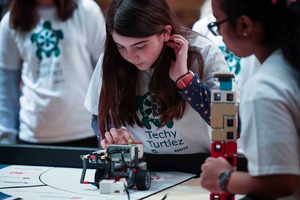 Fourth through eighth graders can join a FIRST LEGO League Challenge team for the first half of the school year, then try out Vex IQ Robotics in the second half.
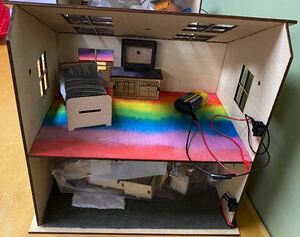 Hands on STEAM is a great introduction to Einstein’s Workshop and Maker culture. Younger students (grades K-1) get a taste of robotics, programming, science, engineering, and inventing. They delve into a new topic every quarter.
Slightly older students design and test things that fly, try advanced LEGO robotics, build handmade robots and upcycled machines, and learn what it takes to be a spy.
Starting in grade 4, students transition to our 3D-Print and Lasercut Design and Fabrication courses where they learn how to design 3D-printable objects, design and make their own laser-cut glowboxes or other inventions, learn stop motion animation, electronics, computer art, and design their own board games.
By middle school, our students are learning arduino and other electronics in addition to refining their 3D design and other maker skills.
High schoolers take the learning further, even learning how to operate our 3D printers and our laser cutter.
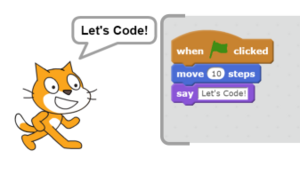 Children in grades 2-6 learn Scratch, a programming language developed at MIT that has caught on worldwide. They’ll start with the basics but will be telling their own stories or writing their own computer games, (yes, including platformers) by the end of the year. This concentration is appropriate for kids who already know some Scratch or who have never seen it before as these courses are highly adaptable to the interests and skills of the students.
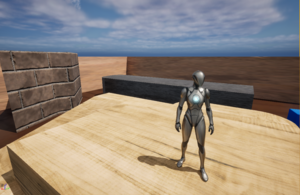
Older kids have multiple options to learn to code. Kids in grades 4-8 can learn how to design and build video game levels using Unreal Engine, a powerful open-source industry tool used to make many of today’s top games.
They can also learn Java to make Minecraft mods or their own animation and games.
Or they can specialize in customizing and modifying Minecraft. We teach WorldEdit, how to make Minecraft Resource Packs, and programming Minecraft mods.
Middle schoolers learn or improve fundamental programming techniques in Python. We follow students’ interests while offering a wide choice of projects for students to explore. Options include an introduction to AI, making games using Ren’Py or Pygame, preparing for the USA Computing Olympiad (USACO), creating a webserver, and more. Students develop coding skills and improve their ability to use algorithms and data structures to solve challenging problems.
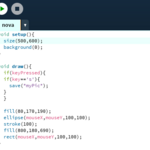 No prior programming experience is required for any of our programming classes. Those with prior experience are given more challenging exercises.
We include discussion of the ethics and controversy around AI and give guidance on appropriate use.
We will also be offering a new Creative AI Lab course starting in Fall 2026. Students will actively experiment as they learn to use AI tools ethically, responsibly, creatively, and safely, developing confidence in their skills with a technology already shaping their future.
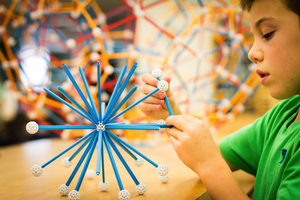 Click here to learn more about the Einstein’s Workshop Math Club (grades 4-8) and Math Club Jr. (grades 1-3).
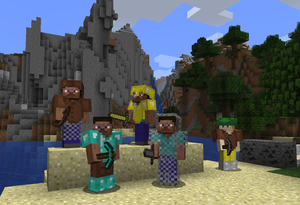 Join a group of like minded builders, crafters and adventurers playing Minecraft. Play on two servers, one in creative mode for unlimited building of epic structures and one in survival mode for the ultimate adventure. Students learn the meaning of good digital citizenship, teamwork, and how to use computers, including keyboard and mouse skills. Our seasoned staff guide students’ focus on building and growing as a group in this one-of-a-kind experience.
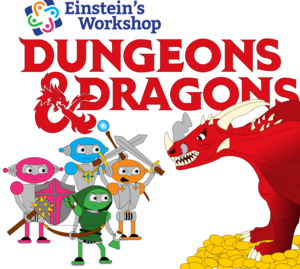 Embark on grand adventures! Explore long lost lands, battle perilous foes, and make new friends along the way. Dungeons and Dragons is great for developing imagination, creative problem solving, and teamwork.
 Learn to play chess and practice with your classmates. Learn fun facets of chess history.
